


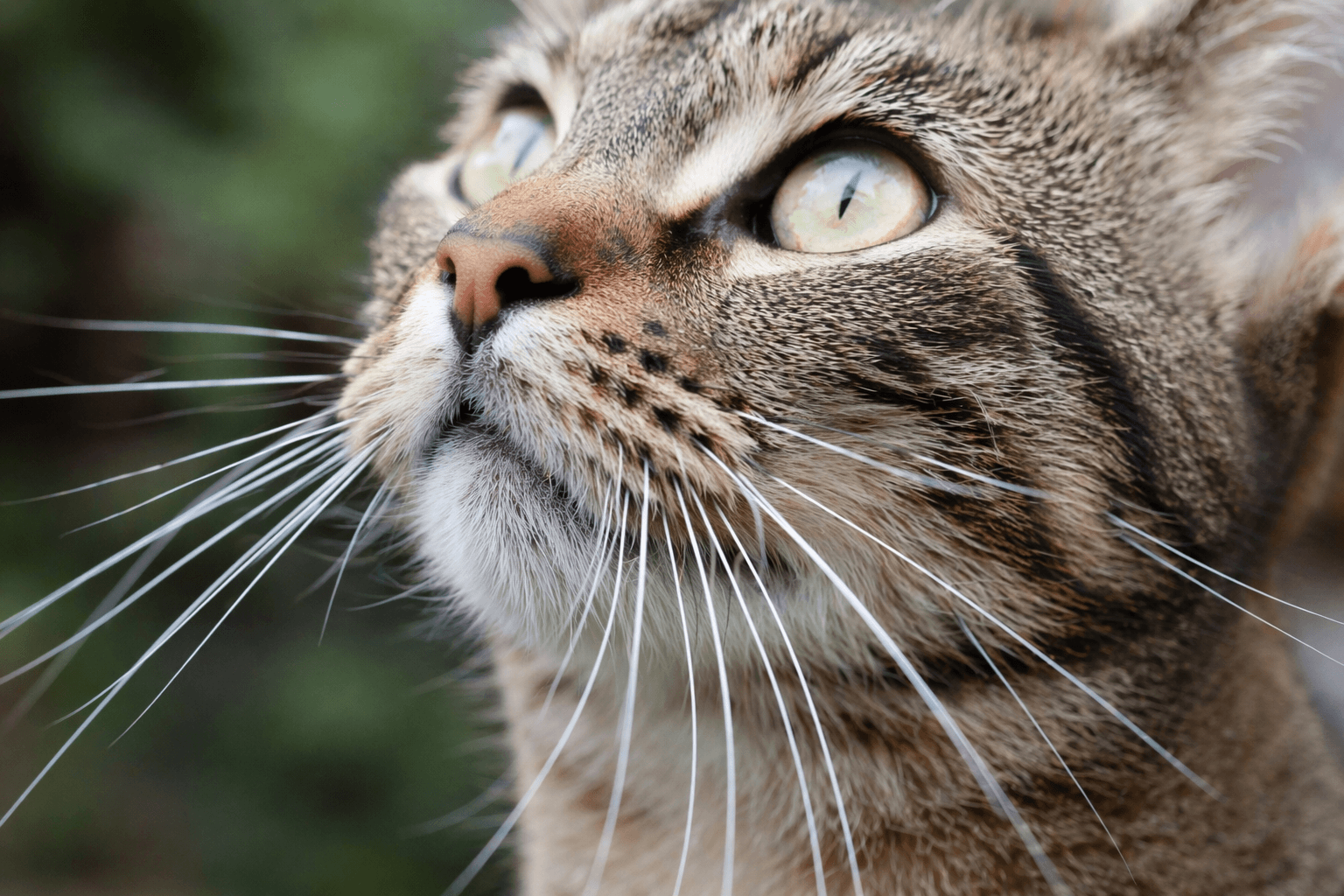
The cat whiskers are one of the most fascinating and misunderstood features of a cat’s anatomy. While they may look like simple facial hairs, whiskers are actually highly specialized sensory tools that play a critical role in how cats navigate, hunt, and interact with their environment.
Most cats typically have 24 whiskers, arranged in four rows on each side of the face. However, their importance goes far beyond symmetry or appearance.
What Exactly Are Cat Whiskers?
Whiskers, scientifically known as vibrissae, are deeply rooted, thick hairs embedded in nerve-rich follicles. Unlike regular fur, they are connected to a dense network of nerves that send detailed sensory information directly to the brain.
👉 In fact, whiskers are so sensitive that they can detect even the slightest changes in air currents.
This allows cats to “feel” objects nearby—without actually touching them.
How Cats Use Whiskers to Navigate
Cats rely heavily on their whiskers to understand the world around them, especially in low-light conditions.
Each whisker acts like a sensor that helps a cat:
-
Detect obstacles in the dark
-
Measure distances
-
Navigate tight spaces
-
Sense movement in the air
👉 This is why cats can move confidently at night, even when visibility is extremely low.
Do Cats “See” With Their Whiskers?
In a way—yes.
Research in veterinary science shows that the part of a cat’s brain that processes whisker input is closely linked to areas responsible for spatial awareness, similar to how vision works in humans.
👉 This means whiskers function almost like an additional sensory system, helping cats build a mental map of their surroundings.
Whiskers and Hunting Instincts
Whiskers are especially important when it comes to hunting.
When a cat is stalking prey:
-
Whiskers move forward to focus on the target
-
They help determine the exact position and movement of prey
-
They guide the cat during the final attack
👉 At close range—when vision becomes less reliable—whiskers take over.
Cats use them to ensure a precise and effective capture.
How Cats Measure Space
Ever wondered how a cat decides whether it can fit through a narrow opening?
👉 It uses its whiskers.
The width of a cat’s whiskers roughly corresponds to the width of its body. By brushing whiskers against surfaces, a cat can instantly determine:
-
If a space is too tight
-
If it can pass safely
-
Whether there’s a risk of getting stuck
What Happens If Whiskers Are Damaged?
Whiskers are essential for a cat’s confidence and coordination.
If they are cut, broken, or damaged, a cat may experience:
-
Disorientation
-
Difficulty navigating
-
Trouble hunting or playing
-
Increased anxiety
👉 Important: whiskers should never be trimmed. Unlike fur, cutting them can significantly affect a cat’s ability to function normally.
Additional Whisker Locations Most Owners Miss
While facial whiskers are the most obvious, cats also have whiskers in other places:
-
Above the eyes (eyebrow whiskers)
-
On the chin
-
On the back of the front legs
These extra whiskers provide even more sensory input, especially for movement and balance.
The Role of Whiskers in Communication
Whiskers also reflect a cat’s mood.
By observing their position, you can better understand your cat:
-
Forward-facing whiskers → curiosity or hunting mode
-
Relaxed sideways whiskers → calm and content
-
Pulled-back whiskers → fear or stress
👉 They are a subtle but important part of feline body language.
Final Thoughts
Cat whiskers are far more than a charming facial feature—they are a highly advanced sensory system that helps cats interpret the world in ways humans can’t.
They allow cats to:
-
Navigate with precision
-
Hunt effectively
-
Move confidently in the dark
-
Interact with their environment in real time
If you pay close attention, you’ll start to notice just how much your cat depends on these incredible tools every single day.
Read next:
-
CAT BREEDS FOR PEOPLE INCLINED TO ALLERGIES
-
SHOULD YOU WALK CAT ON A LEASH?
-
WHY DO CATS PLAY WITH TOILET PAPER?