


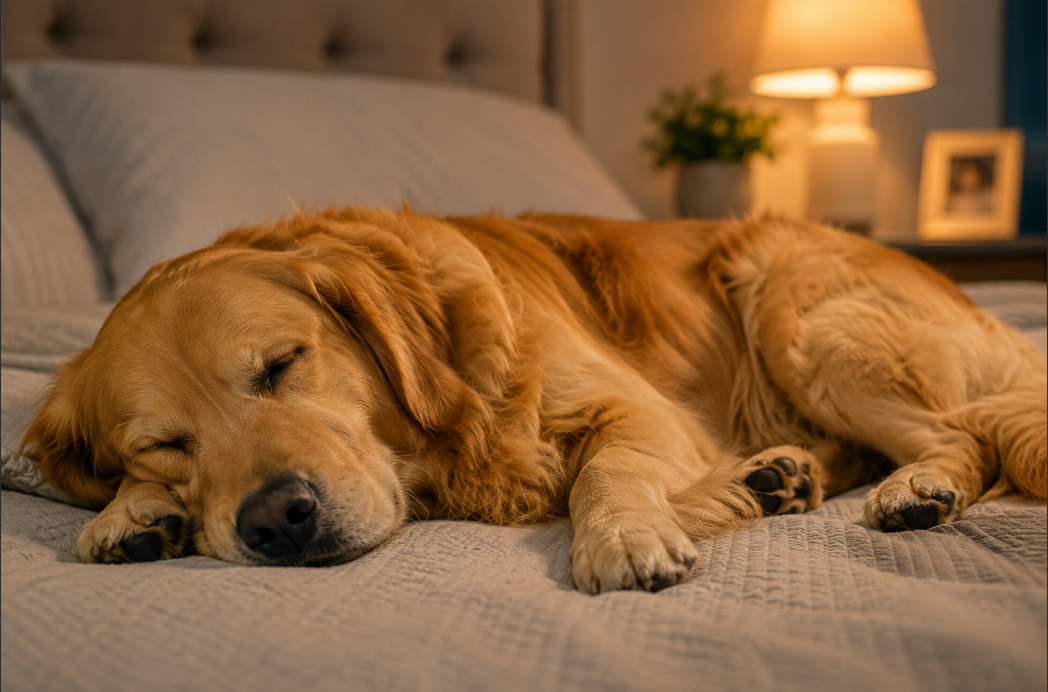
DOG SLEEPING BEHAVIOR: COMPLETE GUIDE
Dogs spend a huge part of their lives sleeping, but many owners still wonder what actually happens while their dog rests. Why do dogs twitch in their sleep? Why do some dogs snore loudly? Do dogs dream like humans do?
Understanding dog sleeping behavior can help owners recognize what is completely normal and what may signal a health problem.
In this complete guide, we explain:
- how dogs sleep
- normal vs abnormal sleep behavior
- twitching and dreaming
- snoring and breathing issues
- sleeping positions
- when to contact a veterinarian
HOW MANY HOURS DO DOGS SLEEP?
Most adult dogs sleep between 12 and 14 hours per day, although puppies and senior dogs may sleep significantly longer.
Several factors affect sleep duration:
- age
- breed
- activity level
- environment
- overall health
Working breeds and highly active dogs often sleep deeply after exercise, while small companion breeds may nap more frequently throughout the day.
Large breeds such as Mastiffs, Saint Bernards, and livestock guardian dogs are especially known for long sleeping periods.
DO DOGS DREAM?
Yes — experts believe dogs do dream.
Research suggests dogs experience sleep cycles similar to humans, including:
- light sleep
- deep sleep
- REM sleep (Rapid Eye Movement)
During REM sleep, dogs may:
- twitch
- move their paws
- make sounds
- softly bark
- move their eyes beneath closed eyelids
These movements are usually harmless and completely normal.
Puppies often twitch more because their brains are still developing and processing large amounts of information.
WHY DO DOGS TWITCH IN THEIR SLEEP?
Mild twitching during sleep is usually connected to dreaming and REM sleep activity.
Common normal signs include:
- paw movements
- ear twitching
- whisker movement
- soft vocal sounds
- tail wagging
However, excessive or violent movements may occasionally indicate:
- seizures
- neurological disorders
- pain
- toxin exposure
Owners should contact a veterinarian if twitching:
- happens while awake
- becomes aggressive or prolonged
- includes loss of consciousness
- causes confusion after waking
Related:
Why Dogs Twitch in Their Sleep: Should Owners Be Concerned?
WHY DO DOGS SNORE?
Dog snoring is extremely common, especially in brachycephalic breeds such as:
- Bulldogs
- Pugs
- French Bulldogs
- Boxers
Snoring usually happens because air has difficulty moving through the airways during sleep.
Other possible causes include:
- obesity
- allergies
- sleeping position
- nasal congestion
- respiratory infections
Occasional snoring is typically harmless. However, sudden loud snoring or breathing interruptions should never be ignored.
Related:
Why Dogs Snore: Common Causes and Warning Signs
CAN DOGS HAVE SLEEP APNEA?
Yes — dogs can develop sleep apnea.
Sleep apnea occurs when breathing repeatedly stops and starts during sleep.
Signs may include:
- loud snoring
- gasping
- choking sounds
- pauses in breathing
- excessive daytime tiredness
Overweight dogs and flat-faced breeds are more likely to experience this condition.
Veterinarians may recommend:
- weight management
- airway evaluation
- sleep monitoring
- treatment for underlying respiratory issues
Related:
Can Dogs Have Sleep Apnea? Symptoms, Causes & Treatment
WHY DO DOGS SLEEP ON THEIR OWNERS?
Many dogs prefer sleeping close to their owners because it provides:
- comfort
- warmth
- security
- emotional bonding
This behavior comes from ancestral pack instincts. Dogs naturally feel safer resting near trusted companions.
Dogs that sleep on their owners are often:
- highly attached
- affectionate
- protective
- emotionally bonded
Some breeds are especially known for this behavior, including:
- Golden Retrievers
- Labradors
- Cavalier King Charles Spaniels
- Vizslas
Related:
Why Dogs Sleep on Their Owners
DOG SLEEPING POSITIONS AND THEIR MEANING
A dog’s sleeping position can reveal a lot about comfort and personality.
Curled Up
Dogs conserve body heat and protect vital organs.
Belly Up
A sign of trust and complete relaxation.
Side Sleeping
Indicates comfort and security.
Superman Position
Common in energetic puppies who nap briefly between play sessions.
Leaning Against People
Shows affection and emotional attachment.
WHEN SHOULD OWNERS WORRY?
Most sleeping behaviors are completely harmless.
However, owners should contact a veterinarian if they notice:
- breathing pauses
- severe snoring
- violent twitching
- difficulty waking up
- blue gums
- collapse
- excessive fatigue
- nighttime panic episodes
Changes in sleep behavior can sometimes signal:
- heart disease
- respiratory illness
- neurological conditions
- anxiety
- pain
Early veterinary evaluation is always safest.
HOW TO IMPROVE YOUR DOG’S SLEEP QUALITY
Owners can improve sleep quality by:
- providing regular exercise
- maintaining healthy weight
- creating a quiet sleeping area
- using comfortable bedding
- keeping a consistent routine
- scheduling regular veterinary checkups
Dogs sleep best when they feel safe, relaxed, and physically comfortable.
FINAL THOUGHTS
Dog sleeping behavior may sometimes seem strange, but most nighttime movements, twitching, and sounds are completely normal.
Understanding how dogs sleep helps owners recognize the difference between harmless behaviors and potential medical concerns.
By observing breathing patterns, sleep habits, and overall behavior, owners can better support their dog’s long-term health and well-being.
FAQ
Is it normal for dogs to twitch while sleeping?
Yes. Mild twitching during REM sleep is usually connected to dreaming and is completely normal.
Why does my dog snore loudly?
Snoring may result from airway structure, sleeping position, obesity, or respiratory issues.
Do dogs have nightmares?
Experts believe dogs can experience unpleasant dreams, although this is difficult to confirm scientifically.
Should I wake a twitching dog?
Usually no. Waking a dreaming dog may startle or confuse them.
Can dog sleep problems be dangerous?
Sometimes. Breathing interruptions, severe snoring, or violent movements should be evaluated by a veterinarian.